

How to understand the working principle of common-mode inductors and why are they connected to the AC side of a switching power supply?
Common-mode inductor is a common-mode interference suppression device with ferrite as the core. It is composed of two coils of the same size and the same number of turns symmetrically wound on the same ferrite ring core to form a four-terminal device. Common-mode inductor plays a role in hindering AC current. For plug-in inductors, we generally see UU type, EE type and ring type.
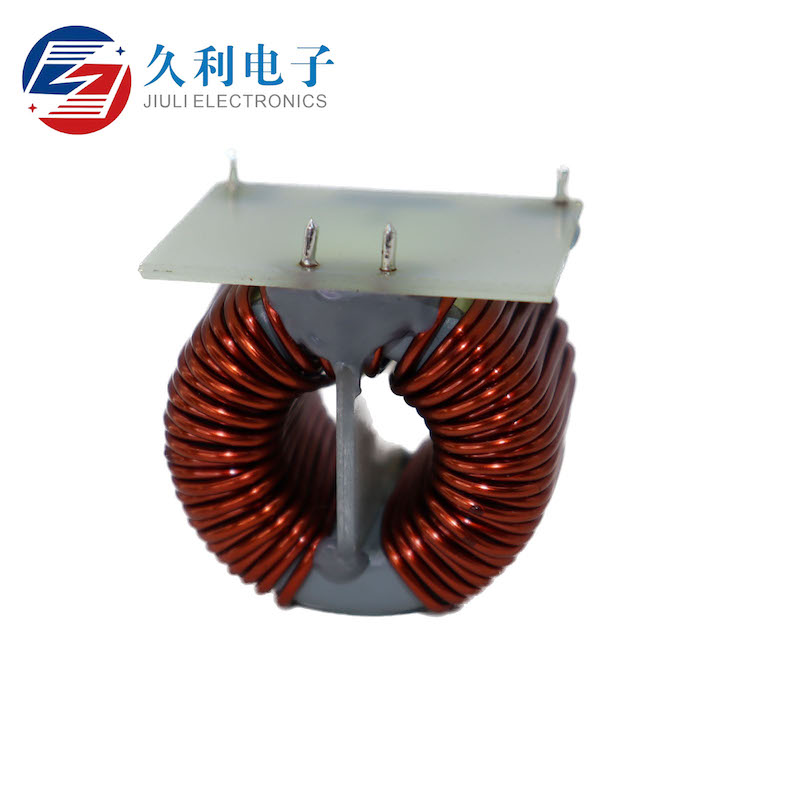
Common-mode inductor is sometimes called common-mode choke because it plays a role of suppression. It is mostly used in switching power supply circuits to form various filters to filter EMI and suppress the electromagnetic waves generated by various high-speed signals from being emitted outward. As shown in the figure below, there is a set of parallel lines in the circuit. Normal signals are basically unaffected when passing through, but when common-mode current flows through, due to the isotropic nature of the common-mode current, a magnetic field in the same direction will be generated in the coil, increasing the inductive reactance of the coil, making the coil appear as high impedance, and producing a strong damping effect. At this time, the common-mode current will be attenuated to achieve the purpose of suppressing interference.
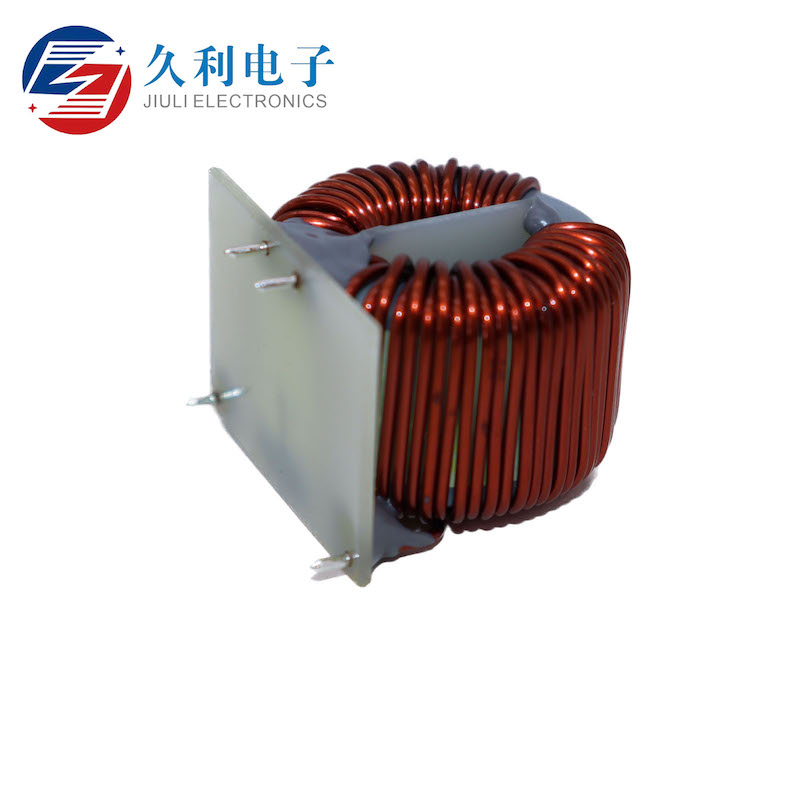
In order to suppress common-mode interference, we know that common-mode signals are signals with equal amplitude and the same phase. The noise they generate is ground noise, which is the noise of the two wires to the ground respectively. After understanding common-mode noise, we know common-mode inductors and why common-mode inductors are connected to the AC side.