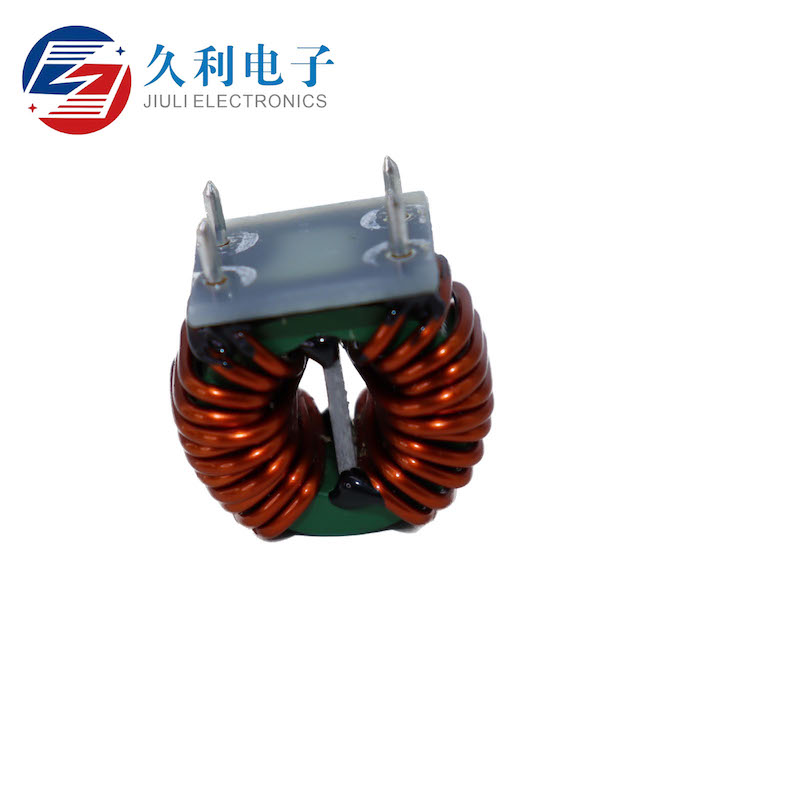
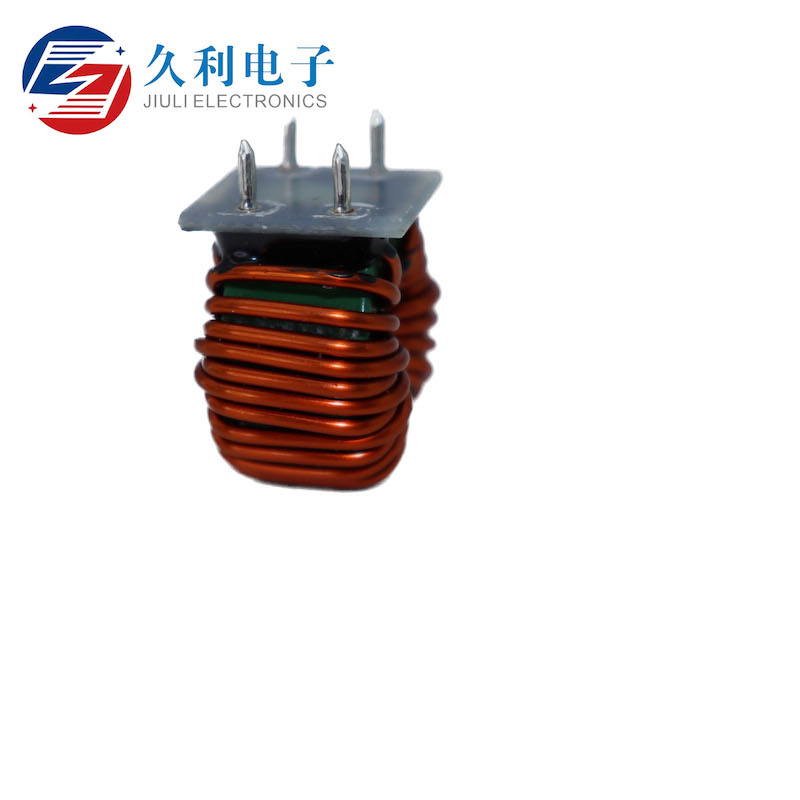
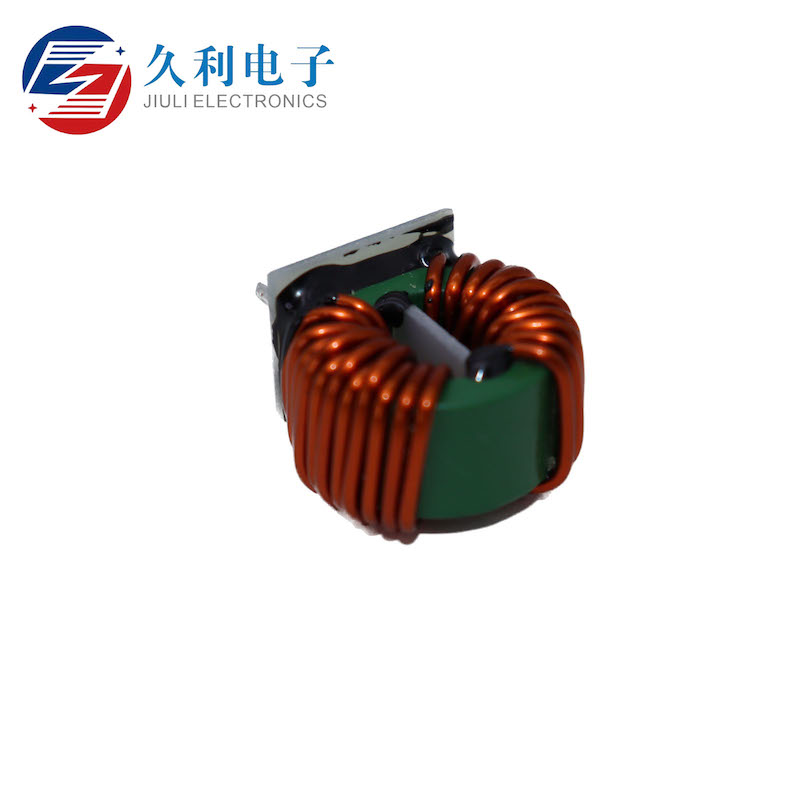
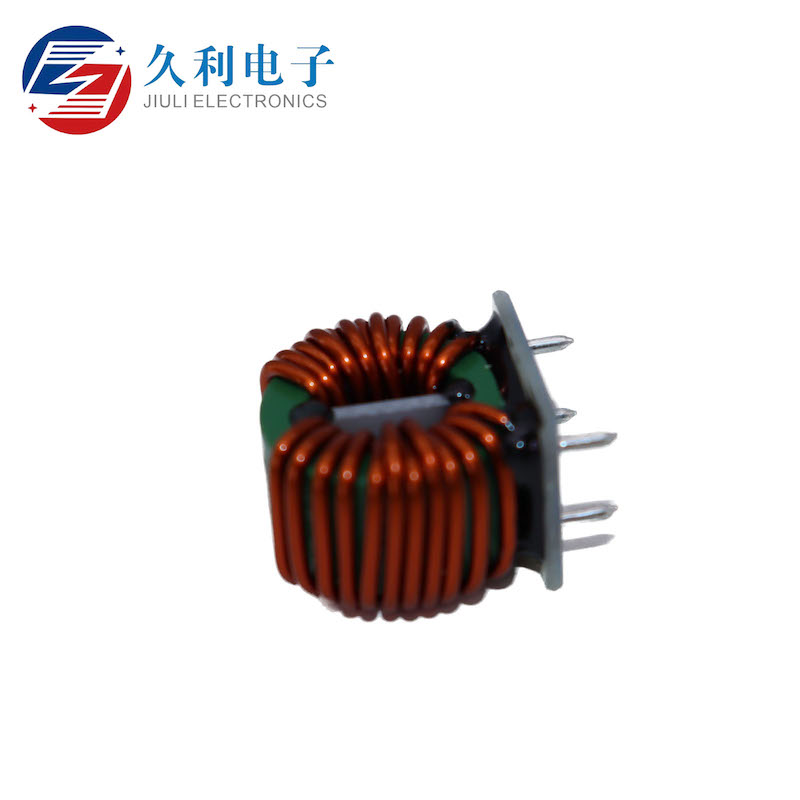
I'm an engineer from Jiu Li. Our main business is in SMD electronic components. Nowadays, in products like smartwatches, small LED drivers, and power modules in mobile phones, everything is getting smaller and smaller - which means the PCB circuit boards inside are also getting more compact. When many overseas customers come to me to inquire about SMD common-mode inductors, they look confused and ask practical questions like: "My PCB is so small. Which size of SMD common-mode inductor should I choose to fit it?" "How can I make it neither take up too much space nor fail to work properly?" "What should I pay attention to when attaching it to the PCB?" Today, I'll explain these things in plain language - without using any technical jargon. It will all be practical dry cargo (useful knowledge). The English and Chinese versions will be corresponding. Whether you're a beginner or an expert, after reading this, you'll be able to apply it. I'll talk about the most commonly used sizes, the parameters to pay attention to, the small tips for PCB mounting, and our best-selling products. I guarantee that after reading this, you'll know how to choose and use them.
Why must we use SMD common-mode inductors for small devices?
Let me be honest with you all: Why not use the previous type of through-hole common-mode inductor? The answer is simple - it's too big! If you're making something like an smartwatch or a mini LED bulb driver, the PCB board would be the size of a fingernail, and there's simply no room for that large and protruding through-hole inductor. SMD common-mode inductors are flat and small, and they are directly attached to the surface of the PCB board, without the need for drilling holes, which saves a lot of space. Moreover, it enables automatic assembly of the machine and can save a lot of time and labor costs during mass production. At JIU LI, more and more customers have switched to the SMD version. To put it simply, if you want to make small devices, there's no other choice but this.
The size is extremely small (suitable for mobile phones, watches, and mini LED drivers)
The greatest advantage of SMD common-mode inductors is their small size! For example, our 0805-sized SMD common-mode inductor is only 2mm x 1.2mm, approximately the size of a grain of rice. It takes up almost no space when installed in smart watches or mini chargers. The 1206-sized ones are slightly larger (3mm x 1.6mm), but they are still much smaller than through-hole inductors. Moreover, when they are attached to the PCB, the protrusion is extremely low, allowing your device to be made thinner. If you are working on compact devices, choosing this type is definitely the right choice.
The machine can automatically assemble (saving time and cost)
If you need to assemble tens of thousands of devices at once, you can't just rely on people to solder inductors one by one. It would be slow, prone to errors, and costly. SMD common-mode inductors are packaged in tape and reel form, which can be directly inserted into the surface mount machine. The machine can automatically take in materials, place and solder them, and there is no need for manual intervention throughout the process. Our customers all say that after switching to our SMD inductors, the assembly speed has increased by more than 30% - there's no need to work overtime or redo work, and the efficiency is fully maximized.
Mass production is reliable (no "substandard products mixed in")
The biggest problem in mass production is that in a batch of products, some inductors work well while others don't. The assembled equipment will be half good and half bad. Re-working and returning goods can really drive you crazy. At Jiu Li, we use high-precision machines to manufacture SMD common-mode inductors. Each inductor is tested before leaving the factory to ensure that their inductance value, current carrying capacity, and filtering effect are exactly the same. The one you receive is a qualified product. There's no need to worry about defective products mixed in, and it saves a lot of trouble.
The most commonly used SMD common-mode inductor size (a popular model from Joli)
There's no need for you to remember a bunch of measurements. For most projects, just three of the most common ones will suffice. The following table is what we use when selecting equipment for our clients. It doesn't contain any technical terms; it's all plain language, easy to understand. Just match it with your own equipment and you'll be good to go.

Among them, 0805 and 1206 are the ones we sell the most, covering 90% of small device projects. For making super small devices (such as smart rings), choose 0805; for LED bulb drivers and mobile phone chargers, 1206 can basically meet the requirements; 1812 is suitable for scenarios that need a slightly larger power but do not want to use a too large inductor.
SMD Common Mode Inductor PCB Mounting Techniques (Even Beginners Can Learn)
Many people choose the right inductor, but when they install it, it doesn't work properly. The problem lies in the PCB mounting layout. Don't panic, you don't need to understand complex circuit principles. Just remember these 4 simple tips, and you can avoid all the pitfalls - these are all practical experiences we have accumulated by helping our clients solve problems in the past.
Technique 1: Try to position it as close as possible to the power interface.
The function of an inductor is to block external noise and prevent it from entering the equipment. If you place the inductor far away from the power interface, the noise will already have entered the PCB board and interfered with other components. Even the most powerful inductor would be of no use in this case. Therefore, try to place it next to the power interface, ideally within 5 millimeters; if the space is extremely limited, it should still be placed as close as possible, the closer the better. This is a technique that is often overlooked but extremely effective.
Technique 2: The two traces on the PCB must be of the same length.
The SMD common-mode inductor has two wires (called windings), which are of the same length. The purpose is to balance the filtering. If the two connecting lines (called traces) drawn on the PCB are not of the same length, width, or spacing, the inductor will become "unbalanced", and the filtering effect will be greatly reduced. Even worse, it may introduce new noise. So, without a complicated design, just ensure that the two traces are symmetrical and of the same length, and there will be no problem.
Technique 3: Don't squeeze it. Leave some space for it to dissipate heat.
Although the SMD common-mode inductor is very small, it still generates some heat when in operation, especially when it carries a large current (above 3A). If you place other heat-generating components (such as chips) very close together, the heat cannot escape, and over time the inductor will fail. As long as there is a 1mm gap around the inductor, without stacking components or running wires, it will be sufficient for it to dissipate heat, which can significantly extend its service life.
Technique 4: Whenever possible, create a grounding plane (to enhance filtering effect)
The ground plane is a continuous metal surface on the back (or inner layer) of the PCB board, used to connect to the power ground. If you can place the inductor above the ground plane, it will act like an additional "shielding cover", effectively blocking more stray noise and providing better filtering performance. If you have a very limited space and can't do it, it can still be used approximately, but if possible, try to create a complete ground plane (instead of making it fragmented) as this will significantly improve the effect.
How to choose the right size? (Done in 30 seconds)
Don't worry too much. There's no need to look up too many materials. Just follow these two steps, and you'll always be able to select the right size and avoid any mistakes:
Step 1: First, measure the available space on the PCB.
First, measure it with a ruler, or refer to your PCB design drawing to see how much space is available for the inductor. For example, if you only have 2mm x 1.2mm of space, then you can only choose the 0805 size, as this is the only one that can fit. If you have 3mm x 1.6mm of space, choose the 1206 size, which will fit perfectly. Remember to leave a little margin (0.2mm - 0.5mm) to avoid any errors in PCB manufacturing, which could prevent the inductor from being installed.
Step 2: Confirm that it can meet your current/filtration requirements
Once the size that can be accommodated has been determined, then check if this size can meet the requirements of your project. For example, if you are making an LED driver and need a current of 3A, the 0805 size can only handle a maximum of 3A, which is already at the limit and is not very safe to use; the 1206 size can handle a maximum of 5A, which has sufficient margin and is more stable to use, and is less likely to cause problems. Based on the above table, by comparing the current and filtering effect you need, you can make the right choice at a glance.
Why choose Joli's SMD common-mode inductor? (It's more convenient.)
We produce SMD common-mode inductors with the aim of making the product easy to use, so that users won't be confused by technical jargon or worry about quality. There are two main advantages, which are particularly practical:
Each one is reliable and there are no defective items.
Each SMD common-mode inductor we produce undergoes testing before leaving the factory to ensure consistent parameters and stable performance. The batch of products you receive, whether it's the first one or the last one, will perform identically and there won't be any cases where some work well while others don't. When mass-producing, it's particularly convenient as there's no need for additional testing by yourself.
It can be used worldwide (after obtaining RoHS/REACH certifications)
If you want to sell the equipment to Europe, North America or Asia, the components must comply with the local environmental protection standards. Our SMD common-mode inductors have all passed RoHS and REACH certifications. There is no need to purchase different inductors for different countries, simplifying the supply chain. If you have higher safety requirements, we also have UL-certified models.
Whether you need a 0805-sized mini inductor for use in a smartwatch; or a 1206-sized one for an LED driver; or if you have special requirements and need customization, we can meet your needs. If you're not sure which one to choose, we can send you free samples for testing, and our engineers can also offer advice. The entire process is conducted in plain language without using technical jargon, ensuring that you can use it with ease and confidence. Just come to us if you have any needs!